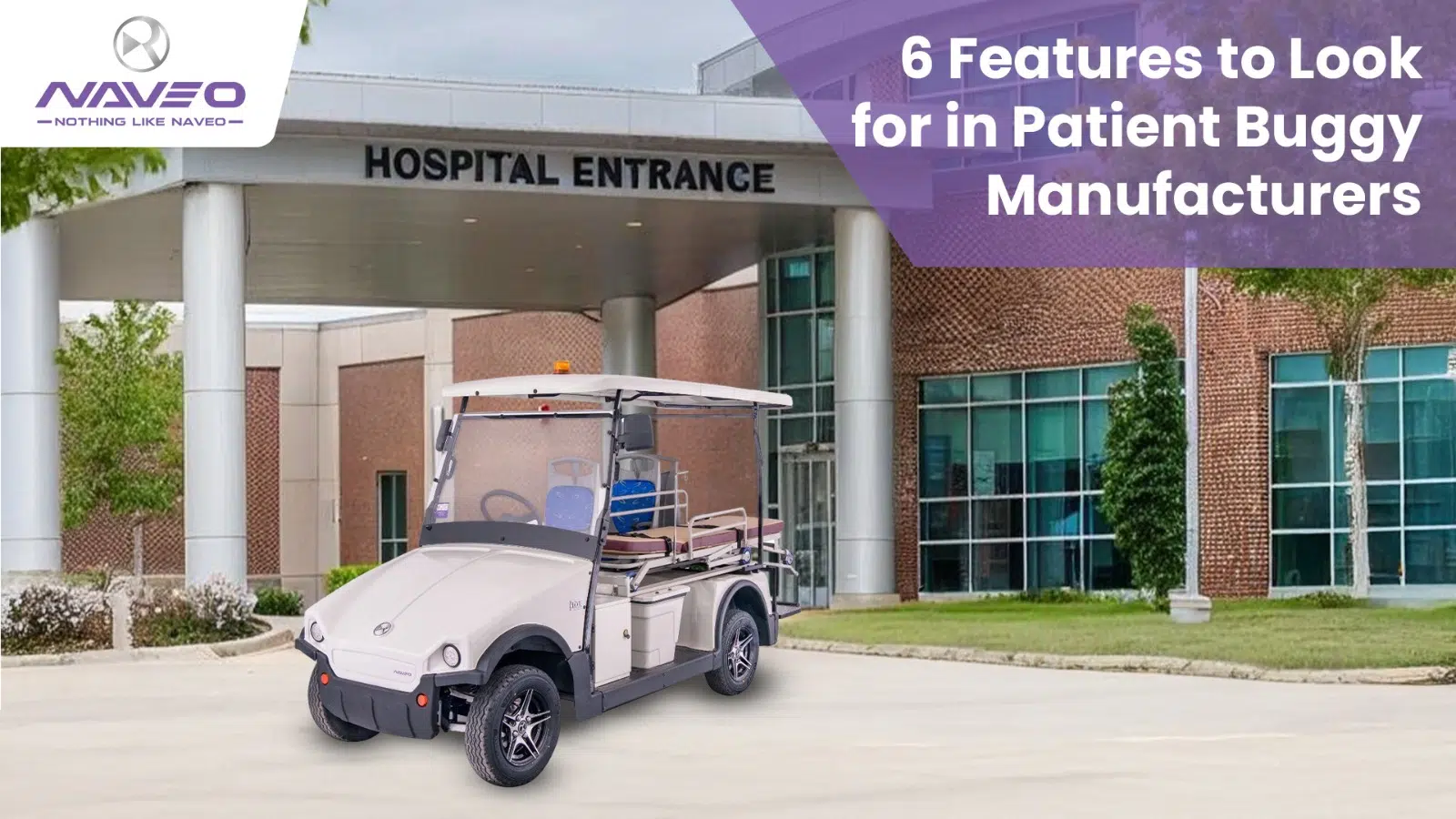
How do you ensure patients move across a large hospital campus with comfort, dignity, and safety?
In modern healthcare facilities, patient transportation is not just about getting from one place to another, it is about creating a stress-free experience for those already dealing with health challenges. From elderly patients who need extra care, to visitors navigating long distances between blocks, and staff working under pressure, reliable mobility makes a significant difference.
This is where battery-operated patient buggies play a vital role. They ensure faster, safer hospital movement, making transfers smooth without straining patients or staff. But not all patient buggies are built the same. Some lack essential safety features, while others fall short in durability or service support.
For hospital administrators, selecting the right buggy is not just a purchase; it is an investment in patient comfort, smooth operations, and long-term reliability. In this blog, we will explore the six most important features to look for in patient buggy manufacturers, helping you make an informed and future-ready choice.
Why Choosing the Right Manufacturer Matters?
Hospitals face distinct challenges in patient transportation, balancing safety, comfort, efficiency, and reliability across busy and diverse campus environments. Here are the factors in brief:
- • Patient safety and comfort: Every ride must be smooth and secure, especially for the elderly or those under treatment.
- • Operational efficiency: Vehicles must be reliable enough to run all day with minimal downtime.
- • Campus adaptability: From indoor corridors to outdoor pathways and ramps, buggies must perform consistently.
- • Cost-effectiveness: Hospitals need vehicles that balance upfront investment with low running costs.
A reliable patient electric golf cart manufacturer understands these challenges and builds vehicles that go beyond basic transport; turning them into solutions for better patient experience as well as hospital efficiency.

What to Look for in a Patient Buggy Manufacturer: 6 Must-Have Features
Discover the six must-have features that define reliable electric golf cart manufacturers, ensuring safety, comfort, durability, and long-term hospital efficiency.
1. Safety and Comfort as Top Priority
When dealing with patient mobility, safety and comfort should never be compromised. A trusted manufacturer ensures that their buggies come with:
- • Strong braking systems made for smooth and efficient stops.
- • Ergonomic, cushioned seating designed for comfort during longer rides.
- • Easy entry and exit with low floor height; especially for elderly patients.
- • Suspension systems that absorb shocks, ensuring no discomfort on uneven surfaces.
- • Weather protection options like roofs, windshields, or enclosures.
Why it matters: Patients being transported are often in lower health. Even a small bump or uncomfortable seating can worsen their condition or cause unnecessary stress. Comfort and safety directly affect their perception of hospital care.
2. Reliable Battery and Powertrain Performance
One of the biggest and essential factors for electric buggy for hospitals is the battery system and motor performance. It is essential to look for:
- • Battery type (lithium-ion preferred for longer life and faster charging, though lead-acid can be cost-effective).
- • Range per charge, especially under load.
- • Charging time and compatibility with on-board/off-board chargers.
- • Motor power to handle inclines, ramps, or heavy loads.
- • Controller system for smooth acceleration without jerks.
Why it matters: An in-patient buggy that stops mid-transfer is not just inconvenient, it can be dangerous. Reliable power ensures continuous service across long hospital shifts without any interruptions.
3. Customization and Adaptability
Every hospital is built in different patterns; and so will be its mobility needs based on those. The best electric golf cart manufacturers offer customization options, such as:
- • Flexible seating layouts (4-seater, 6-seater, 8-seater, 11-seater).
- • Passenger + cargo models for carrying both patients and medical equipment.
- • Special hospital configurations, such as stretcher-friendly layouts.
- • Optional features like enclosures, signage, or medical equipment mounts.
Why it matters: A one-size-fits-all buggy does not work in healthcare. Hospitals often require a mix of models, such as some for quick patient transport, others for staff, and some for carrying equipment. A manufacturer that offers modular options helps future-proof your investment.
4. Durability and Build Quality
Patient buggies face heavy daily use in hospitals, making durability a non-negotiable feature to ensure reliability, safety, and long service life. It is better to look for:
- • Corrosion-resistant chassis and body (powder-coated steel, ABS or polycarbonate body panels).
- • Sturdy tyres and suspension to withstand daily use on various surfaces.
- • Weather resistance for outdoor use in rain, dust, or heat.
- • Proven reliability with long service life and fewer breakdowns.
Why it matters: Frequent breakdowns not only raise maintenance costs but also affect hospital operations severely. An electric buggy for hospitals with strong build quality ensures fewer interruptions and better Returns Of Income.
5. Compliance with Safety Standards and Regulations
Within healthcare settings, meeting safety and regulatory compliance is just as crucial as delivering reliable performance and consistent patient mobility. Manufacturers must follow:
- • Speed controls and limiters to ensure safe movement in crowded areas.
- • Emergency braking systems and safety locks.
- • Non-slip flooring and seat belts for added security.
- • Lighting systems, horns, indicators, and reflectors for outdoor/night use.
- • Certifications and testing that prove safety and compliance with EV standards.
Why it matters: Hospitals cannot afford risks from unsafe vehicles. Strong safety features protect both patients and staff, while also preserving the hospital’s credibility and trusted reputation.
6. After-Sales Support and Service Network
No matter how well-built, every patient buggy requires timely maintenance and readily available spare parts to ensure smooth performance, safety, and uninterrupted service in hospital campuses. When choosing a manufacturer, check:
- • Warranty coverage on motor, battery, and chassis.
- • Availability of local service centres or on-site service options.
- • Spare parts accessibility to minimize downtime.
- • Operator training and user manuals for hospital staff.
- • Maintenance contracts or annual service packages.
Why it matters: Hospitals cannot risk interruptions in patient mobility. Choosing a manufacturer with reliable after-sales support keeps buggies running smoothly, ensuring safety, efficiency, and cost control.
Quick Checklist to Evaluate a Patient Buggy Manufacturer
Before investing in a patient buggy, hospital operators can use this quick checklist to evaluate manufacturers and ensure they meet essential safety, performance, and service standards.
- • Do they prioritize safety and comfort for patients?
- • Are their battery and motor systems reliable with good range?
- • Can they customize models to meet hospital-specific needs?
- • Is their build quality durable enough for daily intensive use?
- • Do they meet safety and compliance standards?
- • Do they provide after-sales service, warranty, and easy access to spares?
If a manufacturer meets all six features, it is a clear sign you have found the right partner to ensure safe, reliable, and patient-friendly mobility for your campus.
Final Thoughts
When hospitals look for patient buggies, they are not just buying vehicles; they are choosing a mobility partner. The six features above; safety and comfort, reliable power, customization, durability, compliance, and after-sales support; separate leading manufacturers from the rest.
For hospital administrators and campus operators, the right choice means every patient journey across the campus is smoother, safer, and more dignified. And that’s where leading electric carts manufacturers like Roots EV stand out; delivering reliable and customized electric mobility solutions designed with healthcare in mind.
Ready to Upgrade Patient Mobility on Your Campus?
With Roots EV, patient mobility becomes safe, reliable, and future-ready.
Frequently Asked Questions
1. What is a patient buggy used for in hospitals?
A patient buggy helps transport patients, visitors, or staff smoothly and safely across large hospital campuses.
2. How many passengers can a hospital buggy carry?
Depending on the model, patient buggies can carry between 4 to 8 passengers, with options for stretcher-friendly designs.
3. How long does the battery last on a single charge?
Most hospital buggies can run 40–80 km per charge, depending on battery type, load, and terrain.
4. Can patient buggies be customized for hospital needs?
Yes. Manufacturers like Roots EV offer customization for seating layouts, stretcher space, and passenger + cargo models.
5. What after-sales support should hospitals expect?
Hospitals should look for warranty coverage, easy access to spare parts, and reliable service networks for uninterrupted operations.