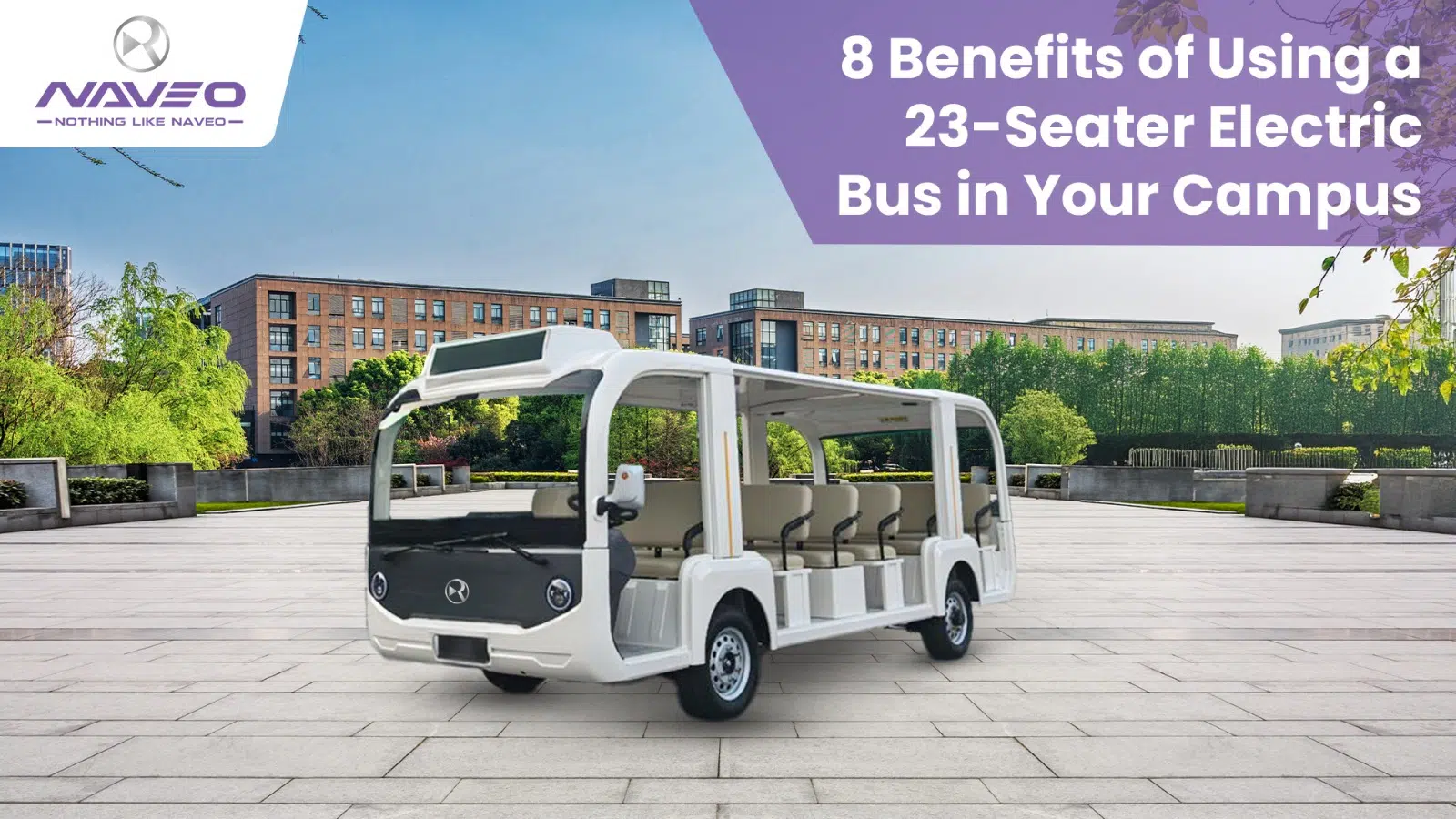
In the modern era of sustainable transportation, electric mobility is transforming how campuses move. Universities, industries, hospitals and residential townships are shifting from traditional diesel or petrol vehicles to clean, efficient and cost-effective electric alternatives. Among these, the 23-seater electric bus has emerged as a reliable, eco-friendly solution for internal campus transport.
Let’s explore the top 8 benefits of using a 23-seater electric bus in your campus and understand why it’s a smarter choice than conventional fuel-based vehicles.
1. Zero Emissions and Cleaner Campus Air
One of the most compelling reasons to adopt an electric bus for campus is its zero tailpipe emissions. Unlike diesel or petrol vehicles that release harmful gases, an electric bus operates cleanly, making it ideal for educational institutions, hospitals and eco-sensitive zones.
A zero-emission electric campus shuttle bus helps in:
- Creating a cleaner and healthier environment
- Reducing respiratory risks for students, staff and visitors.
It also contributes significantly to an institution’s sustainability goals and carbon neutrality targets, enhancing its brand image as an environmentally responsible entity.

2. Lower Operating Costs and Total Cost of Ownership (TCO)
When it comes to operating costs, the Roots EV 23-seater bus offers substantial savings compared to traditional buses. Electricity is far cheaper per kilometer than diesel or petrol and the total energy cost per trip can be reduced by up to 60%.
Additionally, electric vehicles have:
- Fewer moving parts
- No engine oil, filters
- Complex transmission systems
These are resulting in minimal maintenance costs. The regenerative braking system further enhances efficiency by recovering energy during deceleration, increasing battery range and lifespan.
Over time, the total cost of ownership of an electric bus becomes far lower than that of conventional vehicles, offering excellent ROI for campus operators.
3. Quiet Operation and Enhanced Passenger Comfort
Campuses often prioritize a calm and comfortable environment. Traditional diesel buses generate significant noise and vibration, which can disturb classrooms, offices or hospital premises.
In contrast, the 23-seater electric bus operates almost silently, ensuring low noise pollution and a peaceful travel experience.
Its quiet operation also makes it suitable for use in universities, hospitals and research institutions where minimal disturbance is necessary.
4. Safety and Reliability for Campus Commutes
Safety is non-negotiable when it comes to campus transport. The Roots EV RT-B-A23 is designed with modern safety systems, ensuring a secure ride for all passengers. Key features include:
- Double vacuum-boost braking system
- Front disc and rear drum brakes with short braking distance (≤6 m at 20 km/h)
- Reverse cameras and sensors for safe driving
- Seat belts for all passengers
- High-strength steel chassis with e-coating and powder finish for durability
The electric motor and controller ensure smooth acceleration and predictable handling, minimizing mechanical failures and ensuring consistent performance over time.
5. Operational Efficiency and Route Flexibility
A major advantage of the 23-seater electric bus is its balance between capacity and flexibility. With seating for 23 passengers and a shorter turning radius, it is ideal for navigating narrow internal roads in campuses, factories or townships.
The dual charging options allow convenient recharging during off-hours or in between routes.
Its compact design and maneuverability make it perfect for corporate parks, educational institutions and industrial complexes that require short, frequent internal routes.
6. Enhancing Campus Image with Sustainable Mobility
Adopting an electric bus for campus mobility is not just an operational decision, it is a powerful statement of commitment to sustainability. For universities and organizations focusing on green initiatives, integrating electric campus buses aligns perfectly with ESG (Environmental, Social, and Governance) goals.
A 23-seater electric bus powered by clean energy can become a visible example of environmental responsibility, reinforcing your brand as forward-thinking and eco-conscious.
7. Scalable and Future-Ready Transport Solution
As campuses expand, so do their transportation needs. The Roots EV 23-seater bus provides a modular, scalable solution that can easily be expanded with additional units.
Its compatibility with modern EV charging infrastructure makes it easy to integrate into existing or future smart energy systems.
Campuses can deploy multiple buses for peak hours or special events, all while maintaining a unified fleet that’s efficient and easy to maintain. The modular design also:
- Supports upgrades
- Battery
- Software
- Connectivity
These are ensuring long-term viability as electric mobility technology evolves.
This future-ready electric campus transport system allows institutions to stay ahead of regulations, government mandates and sustainability trends.
8. Long-Term Resilience and Future Proofing
Investing in a battery-electric bus ensures long-term resilience against rising fuel prices and tightening emission norms. As electric infrastructure becomes mainstream, campuses that adopt EVs early will enjoy smoother transitions and lower costs in the years ahead.
Battery technologies continue to evolve, offering better range and efficiency. In the future, vehicle-to-grid (V2G) capabilities may even allow electric buses to serve as mobile energy storage units, powering campus facilities during emergencies or off-peak hours.
Primary Necessities for Electric Bus Adoption
While the benefits are clear, successful adoption of electric buses in campuses requires proper planning. Here are some key considerations:
1. Charging Infrastructure
Campuses must plan for adequate charging stations, either overnight or opportunity-based. Roots EV buses support both onboard and offboard chargers, making setup flexible and cost-effective.
2. Route & Energy Planning
Optimize routes based on distance, terrain and passenger load. The 96V battery system ensures ample range for internal transport loops.
3. Maintenance and Service Support
Electric buses need minimal maintenance but require trained technicians for battery and controller systems.
Roots EV’s nationwide service support makes this process seamless.
4. Cost and Incentives
Government subsidies and tax incentives for EV adoption in India further enhance ROI. The payback period for an electric bus is typically shorter due to operational savings.
5. Safety and Compliance
Ensure all electric buses meet automotive and safety standards, including fire resistance, emergency exit protocols and passenger safety systems, all of which the RT-B-A23 is equipped with.
By addressing these factors, institutions can maximize efficiency, safety and return on investment in their electric campus shuttle fleet.
Why Roots EV’s 23-Seater Bus Is the Ideal Choice for Campuses
Roots EV has built a reputation for precision-engineered electric mobility solutions, tailored for real-world campus operations. The RT-B-A23 embodies:
- Robust design built for Indian conditions
- Efficient performance with regenerative braking
- Superior comfort for passengers
- Low noise, zero-emission operation
- Reliable support and after-sales service
Final Words
The shift toward electric mobility is no longer a trend, it is a necessity. A 23-seater electric bus offers the perfect solution for campuses seeking efficient, eco-friendly and cost-effective transport. With its advanced features, robust performance and minimal environmental impact, the Roots EV RT-B-A23 is redefining what sustainable campus transport can achieve.
“Drive your campus toward a greener tomorrow, choose the Roots EV 23-Seater Electric Bus and experience sustainable mobility at its best.”
Contact us today to learn more or request a live demo.
Frequently Asked Questions
1. What is a 23-seater electric bus used for?
It is primarily used for internal transport within campuses, universities, industries, hospitals, and townships to move groups efficiently and sustainably.
2. How long does it take to charge the Roots EV RT-B-A23?
With a high-frequency charger (96V/30A), full charging typically takes around 6-8 hours.
3. What is the range of a 23-seater electric bus?
Depending on load and route conditions, it can comfortably handle a full day of campus operations before recharging.
4. Are electric buses cheaper to maintain than diesel buses?
Yes. Electric buses have fewer mechanical parts and require minimal servicing, no oil changes or engine maintenance.
5. Can electric buses operate on hilly campuses?
Absolutely. The RT-B-A23 offers a 20–25% gradeability, allowing it to handle inclines and slopes efficiently.