As businesses, institutions and campuses across India look for smarter, cleaner ways to manage internal transport, battery operated electric vehicles are emerging as a game-changer. From sprawling university grounds and corporate parks to gated communities and industrial campuses — the shift to electric mobility is not only an environmental choice but a strategic, cost-effective decision for long-term operations.
At Roots EV, headquartered in Coimbatore, Tamil Nadu, we’ve observed growing demand for EVs from clients across PAN India. As an experienced electric vehicle manufacturer and supplier of electric buggies, golf-course vehicles, mini-buses and shuttle vans, we understand why electric vehicles are rapidly becoming the preferred mode of transport for campus-scale mobility and more.
In this article, we unpack 7 key reasons why battery operated EVs represent the future of institutional and commercial transport — and why now is the time to make the switch.
1. Why do battery operated EVs offer superior environmental and public health benefits?
First and foremost: zero-emission electric vehicles dramatically reduce air pollution. Unlike conventional internal-combustion vehicles, EVs produce no tailpipe emissions, thereby cutting down harmful pollutants such as CO₂, NOx, and particulate matter.
In an India where urban air quality is a growing concern — and where dense campuses may have many residents, staff and visitors — operating EV fleets means contributing to cleaner air and healthier living/working environments. As power grids shift toward renewable energy, the lifecycle carbon footprint of EVs continues to drop — making them an integral part of sustainable transport solutions.

2. How do EVs deliver lower running and maintenance costs over time?
One of the strongest business cases for battery operated electric vehicles is their total cost advantage over time. EVs generally have fewer moving parts, which translates to lower maintenance requirements compared to internal combustion engine (ICE) vehicles.
In addition, electricity — especially if sourced during off-peak hours or through renewables — is often cheaper than fossil fuel per kilometer. This significantly reduces fuel costs for fleets.
Over the lifetime of the vehicle, these savings on fuel and upkeep can more than offset the upfront investment, making EVs a financially sound choice for campuses, institutionsl and commercial operators.
3. Why is energy efficiency and operational efficiency better with electric vehicles?
Electric drivetrains are inherently more energy efficient than combustion engines. While traditional engines convert a small fraction of fuel energy into motion, EVs convert a much higher percentage of input electrical energy into usable motion — resulting in fewer losses.
For institutions running frequent, short-distance shuttle services (e.g., staff transport, internal campus loops, guest transfers, parking-to-building shuttles), this efficiency offers a double benefit: reduced energy consumption and predictable, lower operating costs.
Furthermore, fewer mechanical components and simpler drivetrain architecture reduce opportunities for breakdowns, making fleet operations more reliable and easier to manage.
4. How do battery operated EVs contribute to quieter, more comfortable campus environments?
Unlike diesel or petrol vehicles, EVs run almost silently — eliminating engine noise, vibrations, and exhaust odor. This quiet operation is especially beneficial in environments such as educational campuses, hospitals, corporate parks or residential townships, where comfort and minimal disturbance matter.
Moreover, smooth acceleration and regenerative braking enhance passenger comfort — useful for regular shuttle services or guest transport. This makes electric golf buggy-style vehicles or larger EV shuttle vans an attractive choice for internal mobility, where user experience and comfort are as important as efficiency.
5. Why are EVs a strategic choice for long-term energy security and national sustainability goals?
Adopting battery operated EVs reduces reliance on imported fossil fuels, which is a strategic advantage for India’s energy security and economic resilience.
As the national power grid increasingly integrates renewable energy (solar, wind), using EVs further aligns with climate-action goals and reduces overall carbon footprint. For businesses and institutions keen on sustainability, ESG compliance or green-campus certifications — EV fleets represent a tangible commitment to responsible practices.
Moreover, as energy prices and fuel volatility continue, EVs provide a stable, predictable cost base for fleet operations — a significant benefit for institutional budgeting and long-term planning.
6. Why do EVs offer flexibility and scalability for campuses, resorts and commercial clients?
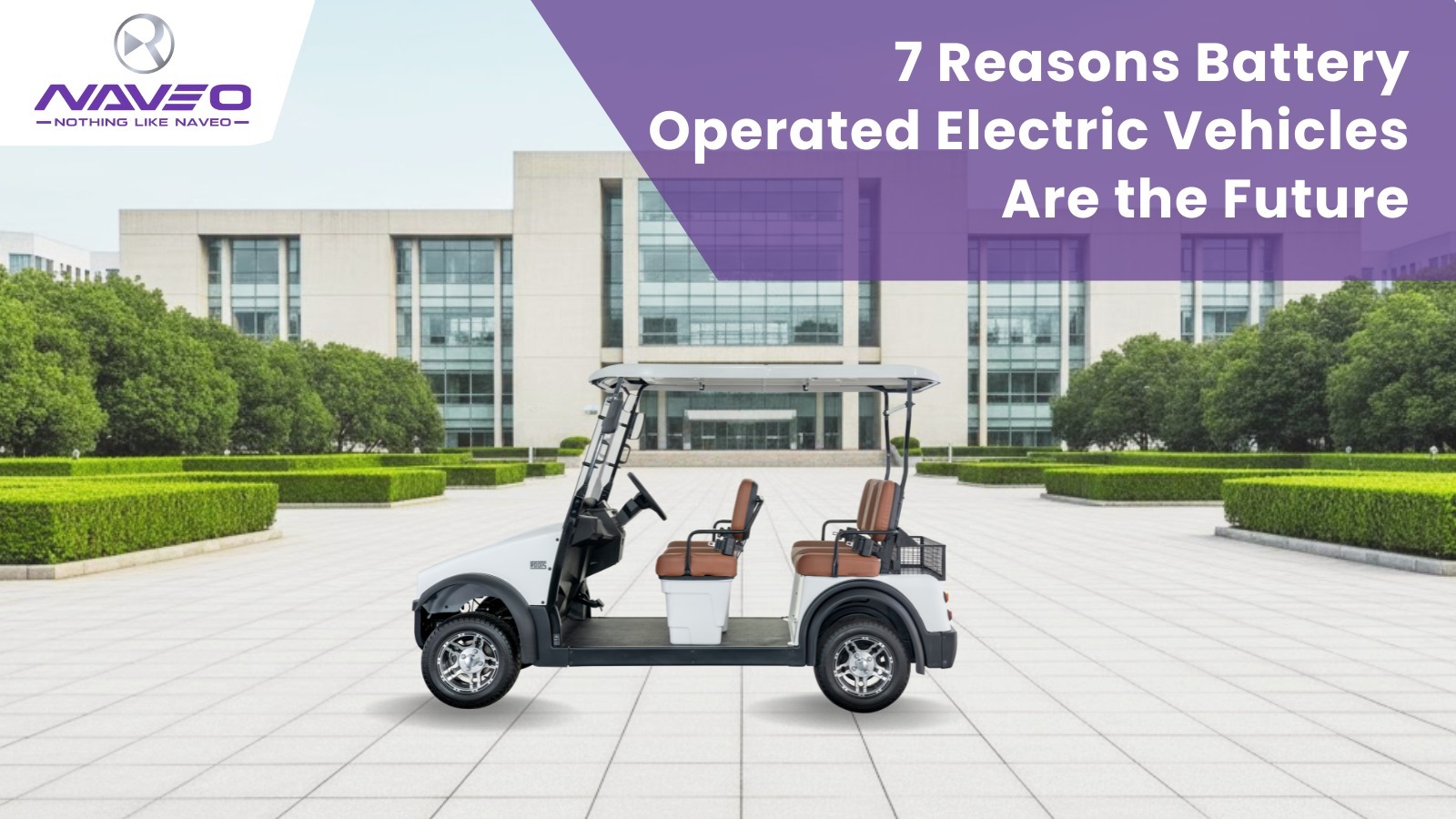
From compact electric golf buggy to larger shuttle vans and mini-buses, EVs provide scalable transport solutions. For smaller campuses or resorts, a few electric carts or buggies may suffice; for larger institutions, a fleet of vans or buses can handle staff, students or guest movement.
Because EVs are modular and often simpler to maintain, expanding or scaling up your fleet is easier. As a pan-India supplier and electric vehicle manufacturer, Roots EV offers a range of EV mobility solutions — from small EV carts to campus-shuttle buses — allowing clients to choose models that match their size, needs and expected usage.
This flexibility supports phased adoption: start small, test operations, then scale up — a model that many modern campuses and commercial operators find appealing.
7. How does choosing a reliable EV manufacturer or supplier ensure long-term success?
The transition to EVs is not just about buying vehicles — it’s about adopting a new mobility ecosystem. Partnering with a trusted electric vehicle manufacturer and battery operated vehicle manufacturers ensures reliable build quality, battery performance, after-sales support and spare-parts availability.
At Roots EV, headquartered in Coimbatore, Tamil Nadu, we are committed to delivering robust EV mobility solutions with PAN India supply and support. A trusted manufacturer brings these advantages:
- Quality assurance and compliance with safety and manufacturing standards
- Warranty support and maintenance services
- Scalable production capacity and delivery logistics across India
- Expertise in matching EV model types (golf carts, buggies, shuttle vans) with client needs
For campuses and institutions that view EV adoption as a long-term investment, such supplier reliability is critical.
Conclusion
The future of transport — especially for campuses, institutional environments, resorts and commercial complexes — is undeniably electric. Battery operated electric vehicles deliver a powerful combination of environmental benefits, economic savings, operational efficiency, comfort and scalability.
At Roots EV, we believe that the shift to electric mobility is not just a trend — it’s a long-term transformation. Based in Coimbatore and serving clients across India, we offer a full spectrum of EV solutions: from electric golf buggies to campus shuttle vans and commercial EV fleets.
If you’re planning to upgrade your internal transport, reduce carbon footprint or future-proof your mobility infrastructure — contact Roots EV today for reliable, tailor-made and sustainable EV solutions that match your campus or business needs.
Ready to embrace clean, efficient and future-ready mobility? Reach out to Roots EV now.
Frequently Asked Questions (FAQs)
1: Why are battery operated electric vehicles better for campuses than traditional vehicles?
They produce zero tailpipe emissions, reduce noise pollution, lower operating and maintenance costs, and support sustainable transport — ideal for campuses, resorts, and institutional environments.
2: Do electric vehicles really save money over time despite higher upfront cost?
Yes. EVs have lower fuel (electricity) costs, fewer mechanical parts (less maintenance), and higher energy efficiency — which typically results in a lower total cost of ownership over their lifespan.
3: How can an institution ensure reliable EV operations after purchase?
By partnering with a reputable electric vehicle manufacturer who ensures build quality, battery and drivetrain performance, provides maintenance and spare-parts support, and offers PAN India delivery & service coverage.
4: Are EVs suitable for heavy or frequent use in commercial or campus fleets?
Absolutely. Electric vehicles are highly efficient in stop-start and short-route cycles, common in campus shuttles, resort transfers, and internal transport loops — often offering better reliability and lower running costs.
5: How do EVs contribute to long-term sustainability and environmental goals?
EVs reduce reliance on fossil fuels, lower greenhouse gas and pollutant emissions, support cleaner air and quieter surroundings, and, when charged from renewable sources, significantly cut carbon footprint — aligning with sustainability and climate-action targets.