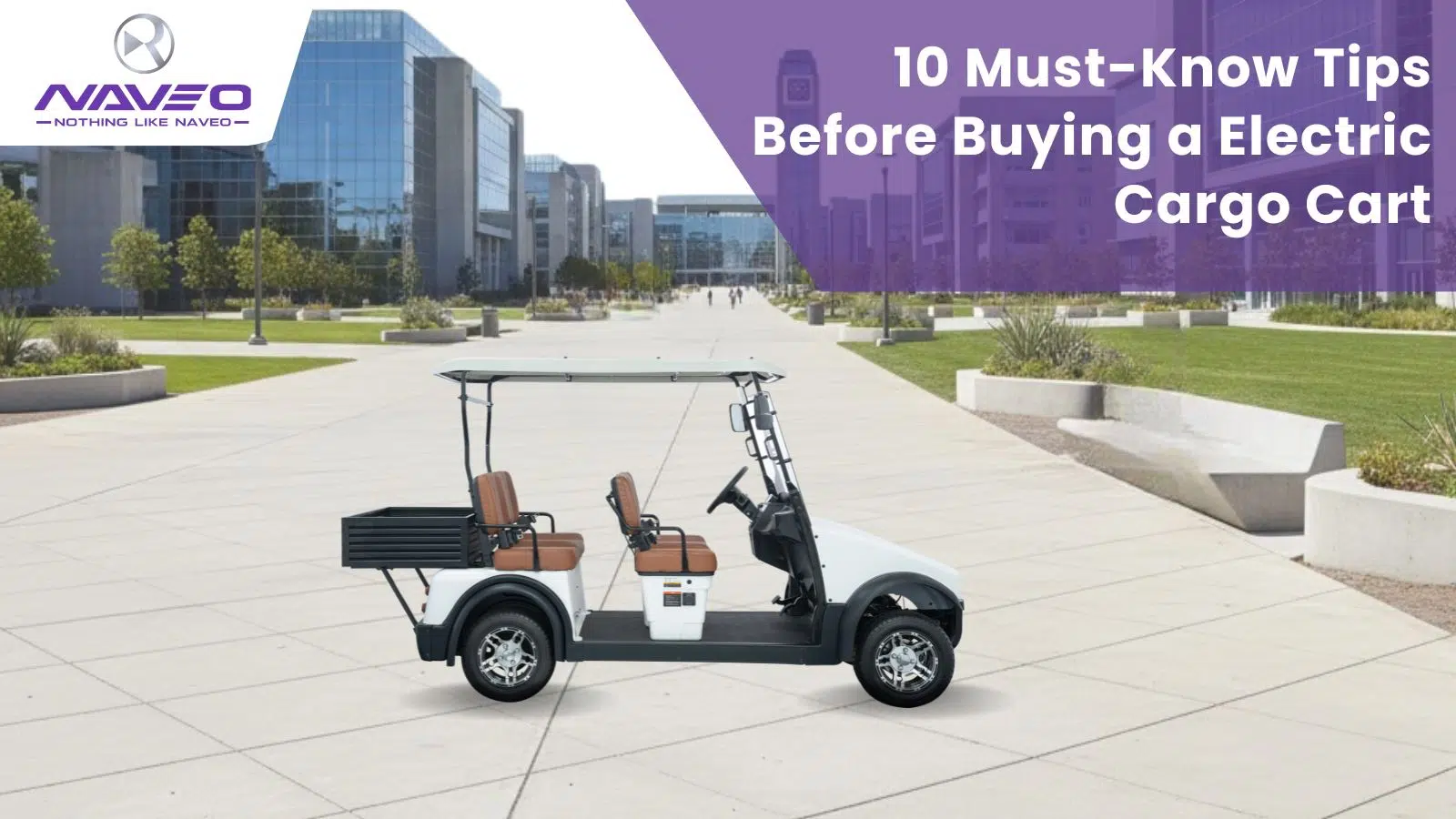
Choosing the right Electric Cargo Cart can dramatically improve productivity, reduce manual labour, and streamline daily operations inside campuses, resorts, warehouses, and industrial facilities. But with multiple models, battery options, and load configurations available, buyers often get confused about what truly matters.
This guide breaks down the 10 most important factors to consider before investing in a cargo EV, helping you make a confident, practical, and long-term decision.
1. Validate the True Load Capacity
Load capacity is the most important feature of any Electric Cargo Cart. Rather than looking at the maximum number, assess your peak load demands. Daily operations involve dynamic loads, inclines, uneven terrain, and add-ons like bins or crates.
A load capacity electric cart rated for 500 kg might safely carry 350–400 kg under real conditions. Underestimating this creates long-term stress on the chassis and motor.

2. Check Motor Torque, Not Just Top Speed
Speed does not make sense if the cart struggles on inclines or ramps. Torque determines how smoothly the vehicle moves under load.
A high-torque electric utility cart climbs slopes confidently, handles uneven surfaces, and avoids stalling. Facilities with ramps, hilly landscapes, or loading docks must prioritise gradeability over speed. This ensures efficient and safe movement throughout the day.
3. Battery Type Matters: Lead-Acid vs Lithium
Battery choice defines charging time, usable range, lifespan, and total cost of ownership.
- Lead-acid: Lower initial cost, heavier, needs regular maintenance
- Lithium: Faster charging, lighter, higher efficiency, longer lifecycle
When comparing a Battery-operated cargo vehicle, factor in shift duration, charging windows, and replacement cycles. For 24/7 campuses or resorts, lithium becomes more cost-effective over time.
4. Understand Charging Time & Charging Infrastructure
Most carts take around 6–8 hours to charge, but buyers should also evaluate charging schedules, power availability, charger compatibility, and whether the charging setup aligns with daily operational needs.
- Whether overnight charging fits the operational schedule
- If multiple carts require staggered charging
- Charger compatibility, voltage requirements, and safety features
A properly planned charging setup keeps your Cargo EV consistently powered, prevents unexpected downtime, and ensures the vehicle is always ready to operate efficiently, even during peak working hours.
5. Frame Strength and Chassis Durability
Cargo carts face daily wear and tear due to road dips, uneven pavements, sharp turns, continuous loading, and weather exposure.
Choose models with:
- Heavy-duty welded steel frames
- Rust-resistant components
- Reinforced suspension
A strong base structure of a vehicle is essential when buying from any cargo electric vehicle manufacturer in India, especially if your operations involve rough outdoor environments or frequent start-stop cycles.
6. Safety Systems Must Be Non-Negotiable
Safety features protect both the driver and your cargo. Look for the following:
- Dual braking systems
- Anti-rollback mechanism on inclines
- Headlights, indicators, and hazard lights
- Rear reflectors
- Emergency stop features
A well-equipped Electric Cargo Cart reduces operational risks, especially in campuses and resorts where pedestrians and staff move around throughout the day.
7. Evaluate Turning Radius & Maneuverability
An excellent electric utility cart should navigate tight corridors, narrow pathways, storage lanes, and indoor-outdoor transitions effortlessly. A small turning radius is critical for:
- Warehouses with narrow aisles
- Hotels and resorts with landscaped pathways
- Hospitals with connecting corridors
- Corporate campuses with parking and delivery zones
Improved maneuverability leads to smoother operations, faster movement in tight spaces, and boosts the operator’s confidence while handling daily tasks efficiently.
8. Ground Clearance & Tire Type Based on Terrain
A cart designed for a golf course may not work in a warehouse, and a warehouse-oriented model may struggle on resort pathways.
Consider the following:
- High ground clearance for uneven surfaces, outdoor paths, and inclines
- Solid tires for warehouses
- Air-operated tires for resorts or campuses with variable terrain
Choose a load capacity electric cart whose build supports daily movement without scraping or bouncing.
9. Evaluate After-Sales Support
Electric carts are simple machines, but quick service access matters. When comparing options from a cargo electric vehicle manufacturer in India, check:
- Service coverage
- Spare part availability
- Warranty duration
- Response time for repairs
- Service centre locations
Reliable after-sales support keeps your vehicle running with minimal interruptions, reduces unexpected delays, and ensures smooth, consistent operations throughout its daily workload.
10. Assess Total Cost of Ownership
Rather than looking only at the initial price, assess the 3–5 year ownership cost by considering maintenance, battery replacement, electricity usage, downtime, and overall operational expenses.
- Electricity consumption
- Battery replacement
- Maintenance
- Downtime costs
- Spare parts
For facilities with heavy movement loads, investing in a durable battery-operated cargo vehicle with a premium battery and a stronger chassis becomes economically smarter over time.
Why Choosing the Right Cargo EV Matters
Across universities, resorts, factories, and hospitals, short-distance material movement has become essential for seamless daily operations. A reliable cargo EV helps reduce manual fatigue, improve time efficiency, lower operational expenses, and enhance overall productivity.
However, many buyers still face confusion when choosing the right model—especially regarding load capacity, battery type, motor strength, and long-term maintenance needs—making it important to evaluate these factors before making a purchase.
Final Words
A well-chosen Electric Cargo Cart can significantly improve onsite productivity, reduce manual effort, and ensure smoother material movement across any facility. By evaluating the right features and avoiding common mistakes, buyers can make smarter decisions. With its durable engineering, high-performance design, and reliable service, Roots EV remains a trusted choice for efficient, everyday cargo operations.
Request a demo from Roots EV today and find the perfect cargo cart for your campus!
Frequently Asked Question
1. What load capacity should I choose for an Electric Cargo Cart?
Pick a cart with 15–20% extra capacity beyond your average load to ensure durability and smooth performance.
2. Are lithium batteries better than lead-acid?
Yes. Lithium offers faster charging, longer life, and higher efficiency, especially for heavy daily usage.
3. How important is motor torque?
Very important. Torque determines how well the cart handles slopes, ramps, and loaded movement.
4. What maintenance does a Battery-operated cargo vehicle require?
Regular battery checks, tire inspections, brake servicing, and routine cleaning ensure long-term reliability.
5. Why choose Roots EV?
Roots EV provides strong chassis design, powerful motors, efficient batteries, and dependable service suited for daily heavy-duty operations.