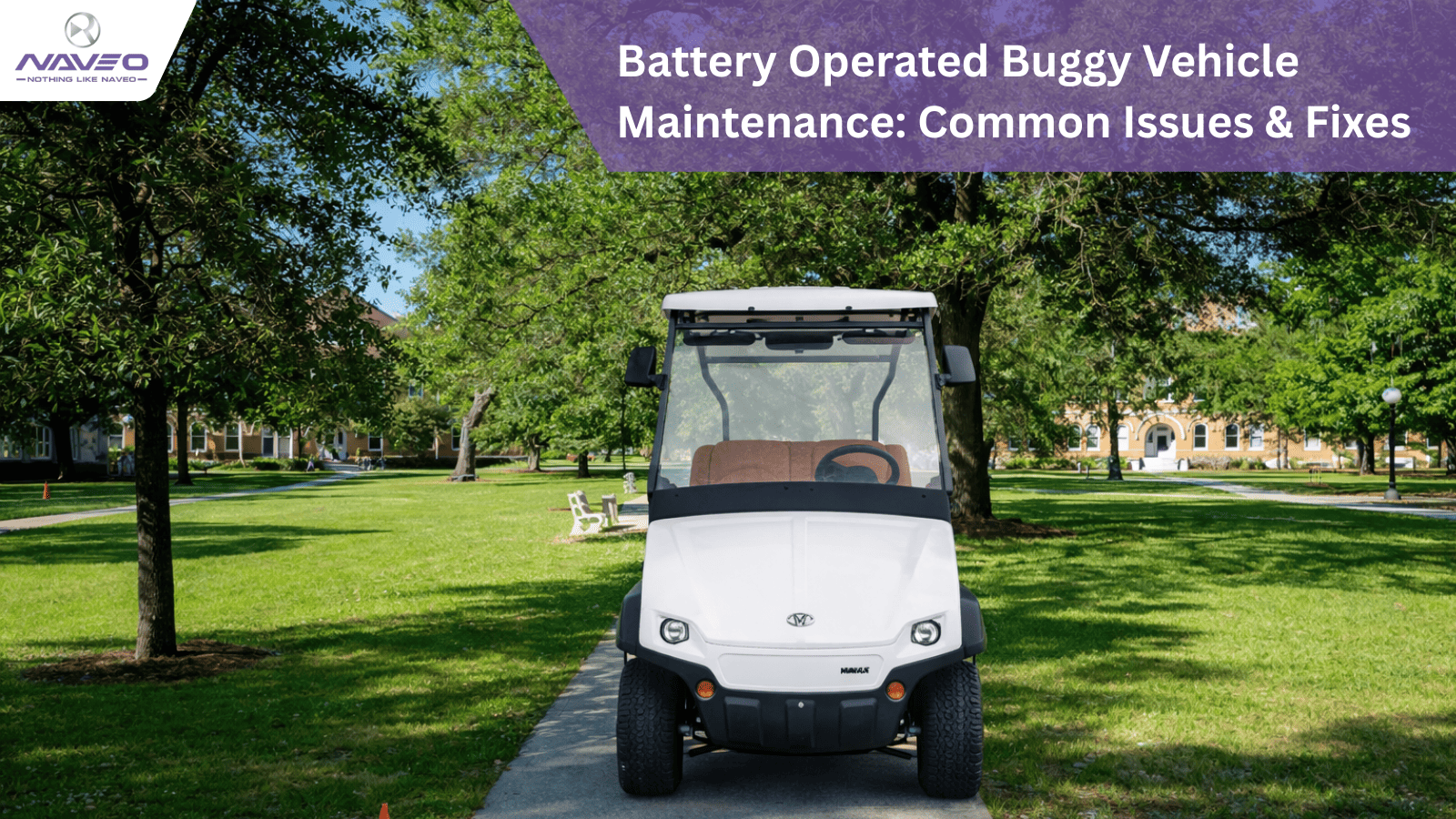
Battery-powered vehicles are becoming essential for smooth in-campus transport, whether in large campuses, resorts, factories or fleets. Like any machine, a battery operated buggy vehicle can sometimes face problems. The good news? Most issues can be easily managed with regular checks and simple care.
In this blog, we will explain the common problems, why they happen and easy fixes that maintenance teams can apply.
Understanding Electric Vehicle Maintenance
Owning a battery operated buggy vehicle is no longer something to worry about. Today’s electric buggies have improved a lot compared to earlier models that caused concerns about battery life and range. Modern batteries last longer and wear out much more slowly than most people expect.
Maintenance managers in campuses, factories and fleet operations often worry about:
- Battery health and performance over time
- Charging slowdowns or errors
- Unexpected downtime
- Myths around high maintenance costs
This guide addresses these issues directly and gives easy, practical tips that maintenance teams can use immediately.
Common Electric Buggy Vehicle Problems and Fixes
Here are the top issues maintenance teams encounter, followed by simple fixes and preventive tips:
1. Battery Degradation
Cause: Frequent full battery drain, continuous overcharging, and exposure to high temperatures gradually reduce battery cell efficiency and lifespan, leading to performance drop over time if proper charging practices are not followed.
Fix:
- Avoid letting the battery drop below 20% on a regular basis.
- Try not to charge the battery above 80% for everyday use.
- Use full 100% charges only when you need longer operations.
Why it helps: Keeping the charge in the middle range reduces stress on lithium battery cells and slows degradation.
Preventive Tip: Use integrated battery health monitoring tools regularly to catch early state‑of‑health (SoH) changes before performance drops significantly.

2. Charging Issues
Cause: Charging problems in battery-operated buggies often occur due to loose or damaged charger connections, improper charging habits, using the wrong charger, or fluctuations in the power supply during charging sessions.
Fix:
- Inspect charger cables for any signs of wear or damage.
- Check connectors for corrosion or loose fittings.
- Examine charging ports on the vehicle for dirt or corrosion.
- Ensure all connections are clean and properly grounded before charging.
Why it helps: Corroded or loose contacts reduce efficiency, increase charge time, and can lead to partial charging cycles.
Pro Tip: Schedule charger maintenance at regular intervals. Confirm that fleet chargers are suited to your buggy’s specifications.
3. Corroded Terminals & Connections
Cause: When battery terminals are exposed to moisture or traces of battery acid, it can cause inconsistent corrosion, weakening connections and potentially leading to reduced performance or charging problems over time.
Fix:
- Check the Terminals: Look carefully for any white, green, or crusty deposits forming on the battery terminals. These indicate corrosion that needs attention.
- Prepare Cleaning Solution: Mix a mild baking soda solution with water. This helps neutralize any acid residue safely.
- Clean the Terminals: Use a battery cleaning brush or a soft wire brush to scrub off corrosion gently, ensuring the terminals are free of buildup.
- Tighten and Protect: Once cleaned, securely tighten the connections and, if possible, apply a thin layer of protective grease to prevent future corrosion.
4. Motor or Controller Errors
Cause: Extended heavy usage, dust or dirt entering components, and excessive heat buildup can place extra strain on the system, leading to reduced efficiency, performance issues, or unexpected motor and controller problems over time.
Fix:
- Clean the Motor Regularly
- Maintain the Controller Unit
- Follow Manufacturer Guidelines
Inspection Tip: Monthly checks of drive components help catch early signs of malfunctions.
5. Brake and Suspension Wear
Cause: Regular stop-and-go usage, carrying heavier loads, and operating on rough or uneven surfaces can accelerate component wear, placing additional strain on braking and suspension systems over time.
Fix:
- Check Brake Pads Regularly: Inspect brake pads for thinning, cracks, or uneven wear that may affect stopping performance.
- Examine Brake Shoes Carefully: Look for signs of damage or excessive wear on brake shoes to ensure consistent and safe braking.
- Inspect Suspension Components: Check suspension parts such as springs and shock absorbers for wear, looseness, or imbalance that can impact ride comfort.
- Adjust or Replace When Needed: Adjust brake tension where required and replace worn or damaged components promptly to maintain safety and smooth operation.
6. Loose Wiring and Electrical Problems
Cause: Continuous vehicle vibrations, exposure to moisture, and natural wear over time can gradually weaken wire connections, causing them to loosen and potentially lead to electrical faults or inconsistent performance.
Fix:
- Inspect Wiring Connections
- Secure Loose Wires
- Replace Damaged Wiring
- Add Protective Insulation
Preventive Maintenance Best Practices
To keep your buggies reliable and resilient:
Battery Health Monitoring
- Perform Weekly Battery Checks: Use onboard diagnostic systems or simple battery testing tools every week to monitor battery condition.
- Monitor Charge Cycles Regularly: Keep track of how often the battery is charged and discharged to understand usage patterns and prevent unnecessary stress on the battery.
Charging Best Practices
- Limit Deep Battery Discharge: Try not to drain the battery completely on a regular basis. Maintaining moderate charge levels helps protect battery health.
- Use Fast Charging Only When Needed: High-power fast chargers should be used occasionally, not daily.
- Plan Charging After Daily Operations: Schedule charging once operations are complete to ensure vehicles are fully ready and available for the next shift without disrupting fleet availability.
Routine Inspection Schedule
- Monthly Performance Checks: Inspect battery condition, motor cleanliness and controller performance to ensure smooth operation and identify early signs of electrical or mechanical strain.
- Periodic Professional Servicing: Schedule in-depth brake, suspension, and system servicing at fixed intervals, along with a comprehensive annual check by a qualified EV technician to maintain long-term reliability.
Clean and Store Smartly
- Maintain a Clean Storage Area: Always park vehicles in a clean, dry space to prevent dust buildup and reduce the risk of moisture affecting electrical components..
- Protect from Weather Exposure: Store buggy vehicles under proper cover to shield them from rain, humidity, and harsh sunlight, especially during monsoons or extreme weather conditions.
Conclusion
Maintaining a battery operated buggy vehicle from Roots EV is easier than most managers think. Common issues usually come from basic things like charging, battery care, or missed checks, and these can be easily handled with regular maintenance.
As a leading buggy vehicle manufacturer, Roots EV emphasizes easy maintenance, reliability, and long‑term value so your fleet runs with minimal downtime.
Ready for Trouble‑Free Operations?
Contact Roots EV today for professional maintenance support, genuine spare parts, and expert advice tailored to your campus, factory, or fleet need.
Frequently Asked Questions (FAQs)
1. How often should a battery operated buggy vehicle be serviced?
Basic checks should be done weekly, with a detailed service every 3–6 months.
2. How long does a buggy battery usually last?
With proper charging and care, buggy batteries typically last 4–6 years.
3. What is the most common maintenance issue in electric buggies?
Improper charging habits are the most common cause of battery and performance issues.
4. Are electric buggy maintenance costs high?
No. Regular maintenance costs are usually lower than fuel vehicles when done on time.
5. Can regular maintenance reduce downtime?
Yes. Routine inspections help detect small issues early and avoid unexpected breakdowns.