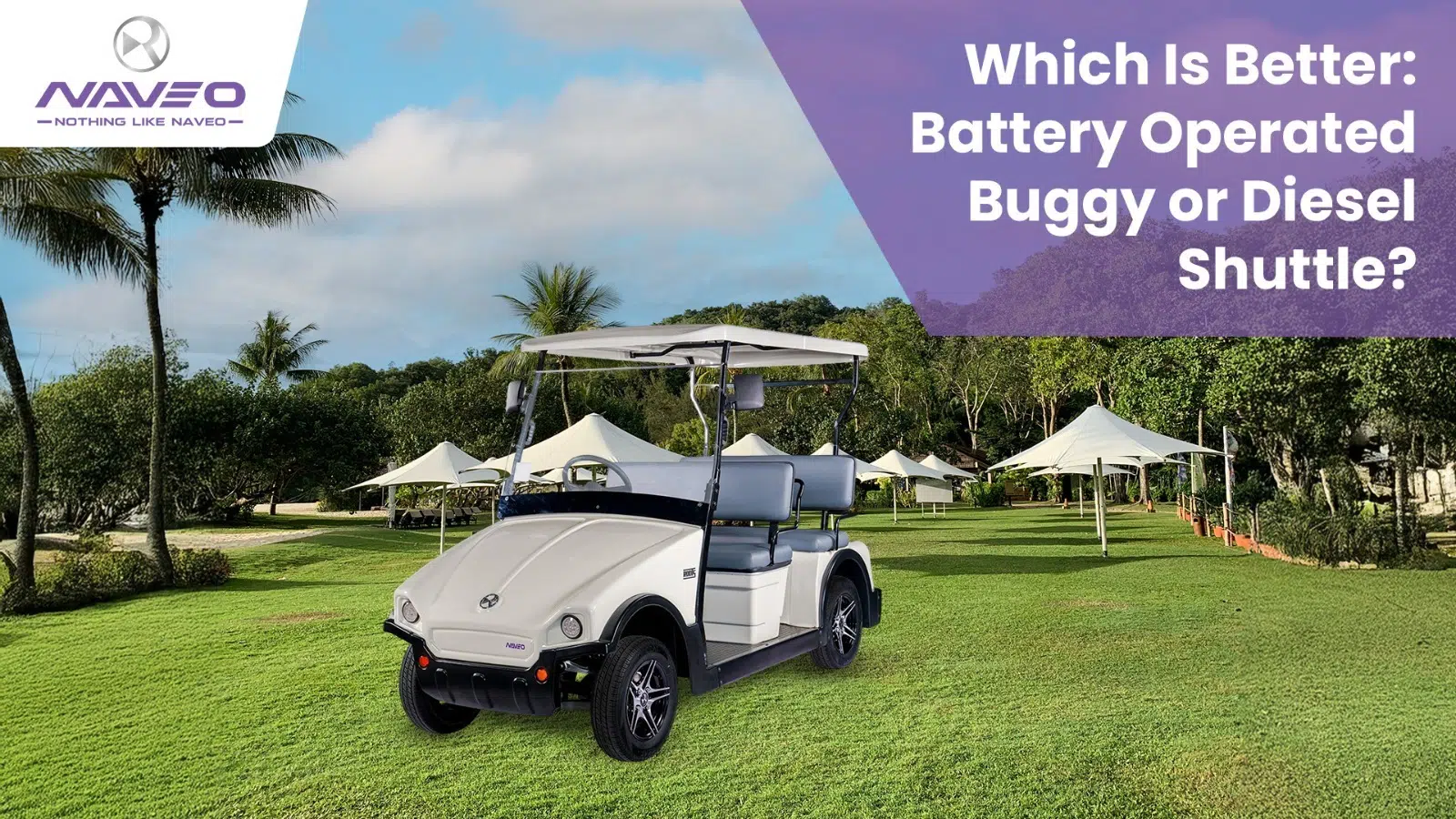
Being moved around tops your options for most big campuses, resorts, or factories. But with electric buggies or diesel shuttles, how will you know which ones right for you?
Diesel vs. Electric Buggy: A Simple Comparison
Deciding between a diesel shuttle vs electric buggy is more than the fuel they consume. It’s about a completely different form of operation. While diesel shuttles have existed for centuries, electric vehicles (EVs) are now a viable option.
1. Getting Around and the Noise They Generate:
The diesel shuttle has a heavy-duty engine that can climb hills and work through rough terrain. But ordinarily, having that kind of power isn’t required in locations for simple transporting of people from place to place, such as on a college campus or at a hospital. The electric shuttle vehicles are calm and the noises they produce are subtle. Consider how wonderful it would be to have that silent buggy cruising around a hospital or a quiet neighbourhood!

2. Environmental Impact:
This, however, is the moment in favor of the battery operated buggy. No emissions go from their tailpipe, which in turn ensures cleaner air for us. The dreaded diesel shuttles, on the other, emit plenty of foul-smelling emissions and gases. If your school or business needs to be greener, using a battery-operated buggy is an easy and obvious way to demonstrate it.
Costs and Maintenance: Diesel vs Electric Buggy
Purchasing a shuttle means you have to think along the lines of the long-term expenses. A considerable factor in this decision is the diesel shuttle vs electric buggy cost.
Price: At times, the beginning EV buggy price in India might be a little bit more than that of the diesel version, but eventually, you will save an incredible amount of money.
Working Charges: Electric buggies are less expensive to operate. Electric charges are generally lower than diesel fuel.
Maintenance: Now, this is a great edge for electric. The low-maintenance electric buggies suppliers would tell you that electric buggies are simpler with fewer components than a diesel engine.
The reversed road here: no oil change, no change of fuel filter, and less time for repairs. Diesel shuttles demand costly and frequent check-ups for maintaining their engines.
Finding the Right Supplier
Now, if you are prepared to purchase a new vehicle, then finding the proper shuttle manufacturers for campuses makes all the difference. Many battery-operated buggy manufacturers provide all kinds of models, ranging from small buggies to big electric shuttles.
Conclusion: The Better Pick
Diesel shuttles have been declared better for so many years, but the options for the battery operated buggy are growing bigger and clearer. They are environmentally friendly and cheaper in terms of ergo and almost zero maintenance. With more and more suppliers of battery operated buggy and low-maintenance electric buggy, switching to electric is easier and, in fact, sensible than ever before.
Frequently Asked Questions
1. Which is cheaper to run: a diesel shuttle or a battery operated buggy?
A battery operated buggy is much cheaper to run because charging costs less than buying diesel fuel. Over time, this makes electric buggies more economical.
2. Do battery operated buggies need a lot of maintenance?
No, they need very little maintenance. Since they don’t have engines like diesel shuttles, there’s no need for oil changes, fuel filters, or frequent servicing.
3. Can an electric buggy carry the same load as a diesel shuttle?
Diesel shuttles are more powerful and better for rough terrain or heavy loads. But for campuses, hospitals, and resorts, an electric buggy works perfectly for smooth and quiet transport.
4. Are battery operated buggies environmentally friendly?
Yes. They produce zero tailpipe emissions, which means cleaner air and less pollution compared to diesel shuttles.
5. Is the price of an electric buggy in India higher than a diesel shuttle?
The starting price of an electric buggy may be slightly higher, but the savings in fuel and maintenance costs make it more cost-effective in the long run.