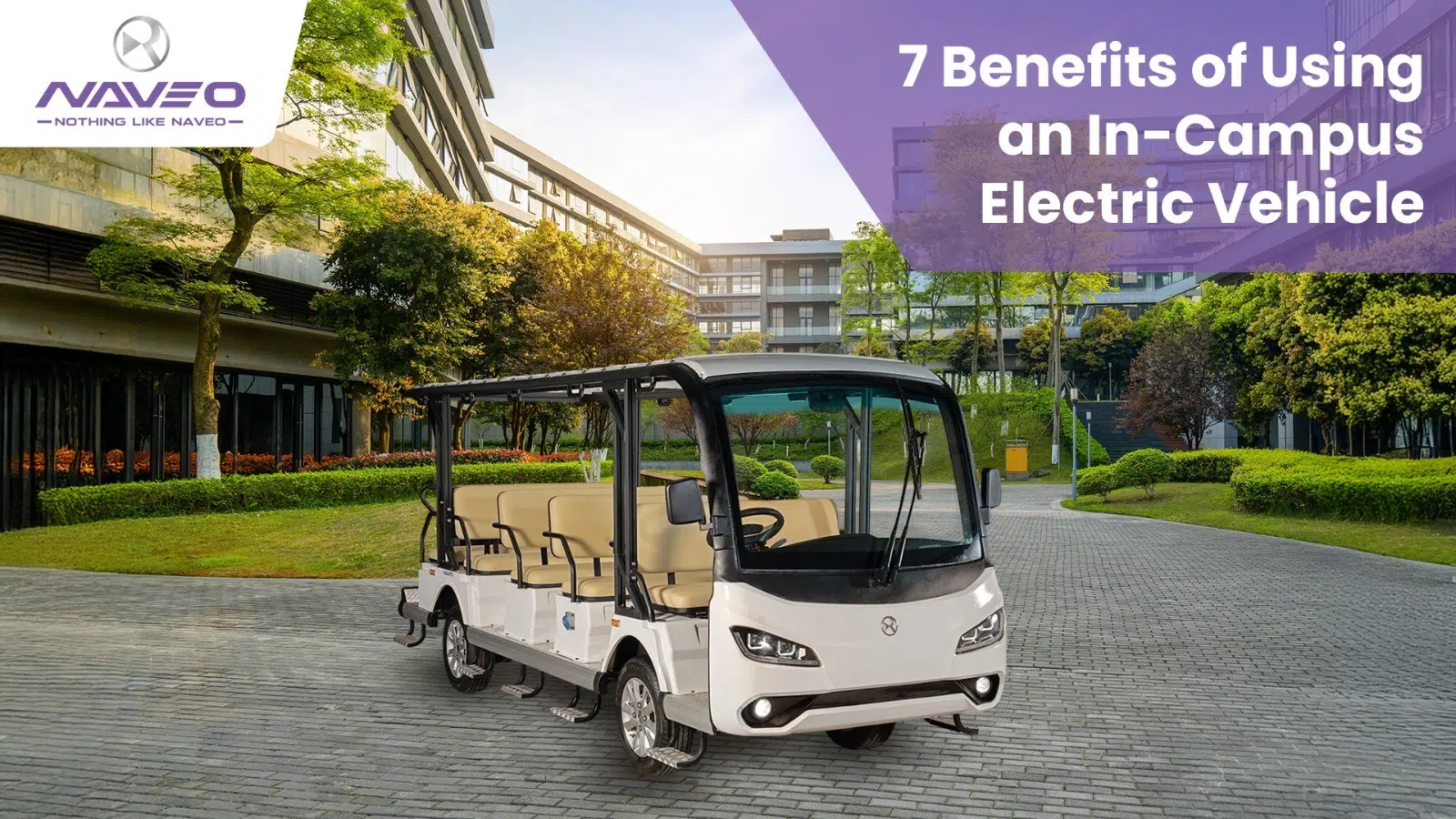
Why Campuses Need Electric Vehicles
Campuses across the world are changing rapidly. Whether it’s a university, college, corporate park, or large school, institutions are constantly looking for smarter ways to run their facilities. One area often overlooked but highly impactful is mobility inside the campus. Traditionally, petrol or diesel buggies and vans have been used to move students, faculty, and visitors. But these come with challenges — rising fuel costs, noise, pollution, and high maintenance.
This is where the in-campus electric vehicle steps in as a game-changer. From campus electric buggies to electric campus shuttles, these vehicles are not only sustainable but also economical and practical for everyday use.
Let’s look at the 7 major benefits of using an in-campus electric vehicle and why they are quickly becoming a necessity for modern institutions.
1. Big Savings on Fuel and Maintenance
One of the biggest advantages of an electric vehicle for universities and schools is the cost savings. Running a petrol or diesel buggy is becoming expensive with fluctuating fuel prices. On the other hand, charging a battery-operated buggy costs far less.
Maintenance is another factor. Internal combustion engines (ICE) have many moving parts that require regular servicing, oil changes, and expensive repairs. EVs are simpler machines with fewer parts, meaning lower breakdowns and longer service intervals. Over a year, institutions can save lakhs of rupees by switching their fleet to electric.

2. Eco-Friendly and Zero Pollution
Sustainability is no longer optional — it’s a responsibility. Students, parents, and employees prefer eco-friendly institutions. Petrol and diesel vehicles contribute to air pollution and carbon emissions, which go against the green initiatives that most campuses claim to support.
An eco-friendly campus transport system using EVs produces zero tailpipe emissions. This means cleaner air for everyone on campus, healthier surroundings, and a positive contribution towards global climate goals. Many institutions also highlight EV adoption in their CSR and sustainability reports, which strengthens their reputation.
3. Quiet and Peaceful Rides
Unlike noisy petrol engines, a campus electric buggy runs almost silently. This makes the campus peaceful and more suitable for learning, research, and cultural activities. A quiet environment helps students focus and reduces distractions.
4. Safe and Comfortable for Everyone
Campus roads are busy with pedestrians, bicycles, and regular traffic. Electric campus shuttles are designed with controlled speeds, smooth braking, and stable handling, making them safer for crowded areas.
They also provide a more comfortable experience for staff, students, and visitors, especially during long walks across large university or corporate campuses.
5. Enhances Campus Image and Reputation
Adopting an in-campus electric vehicle is not just practical; it’s also a branding advantage. Institutions that use eco-friendly campus transport stand out as forward-thinking, responsible, and innovative. Parents, students, employees, and visitors view them as modern and environmentally conscious.
This reputation-building element often becomes a deciding factor for students choosing universities and for businesses partnering with corporate campuses.
6. Versatile for Multiple Uses
In-campus EVs are versatile. They can serve as:
- Shuttle EVs for daily transport
- Campus electric buggies for guest tours
- Event EVs for carrying VIPs and visitors
- Utility EVs for moving goods and equipment
This flexibility makes them a valuable part of electric vehicles for schools, colleges, and universities, meeting multiple needs with one sustainable solution.
7. Long-Term Investment with ROI
While battery-operated buggies and shuttles may cost more upfront, their total cost of ownership is much lower. Savings on fuel, reduced maintenance, and available government subsidies ensure a better ROI.
Over 5–7 years, an institution spends far less on EVs compared to petrol or diesel fleets. This makes EVs a smart long-term investment for eco-friendly campuses.
Real-World Example
Many universities and IT parks in India and abroad have already switched to electric campus shuttles. These campuses save lakhs annually, reduce emissions, and proudly showcase their green initiatives.
This shows that in campus electric vehicles are not just a concept — they’re a proven solution.
Conclusion: A Smarter, Greener Choice
Switching to in-campus electric vehicles is not just about being trendy — it’s about being practical, cost-efficient, and sustainable. EVs help campuses:
- 1. Cut costs significantly
- 2. Reduce pollution
- 3. Enhance safety and comfort
- 4. Build a green, modern image
- 5. Serve multiple transport needs
- 6. Achieve better ROI in the long term
If your campus is still depending on fuel-powered vehicles, now is the time to make the switch. By adopting EVs, you are not just saving money — you are creating a smarter, greener, and future-proof campus.
FAQs on In-Campus Electric Vehicles
1. What is an in campus electric vehicle?
An in-campus electric vehicle is a battery-powered transport solution used inside universities, schools, IT parks, and large campuses for eco-friendly mobility.
2. How long does a campus electric buggy run on one charge?
Most campus EVs can run 60–100 km on a single charge, depending on the model, battery size, and usage.
3. Are electric campus shuttles safe for students?
Yes. They are designed with controlled speed, strong brakes, and stable handling, making them safer than petrol or diesel vehicles on campus.
4. How much does a battery-operated buggy cost?
The cost varies by model and seating capacity, but most start from ₹3–₹6 lakhs and can go higher for larger shuttles.
5. Why should schools and universities switch to EVs?
Because EVs save money on fuel and maintenance, reduce pollution, improve campus reputation, and support sustainability goals with a better long-term ROI.